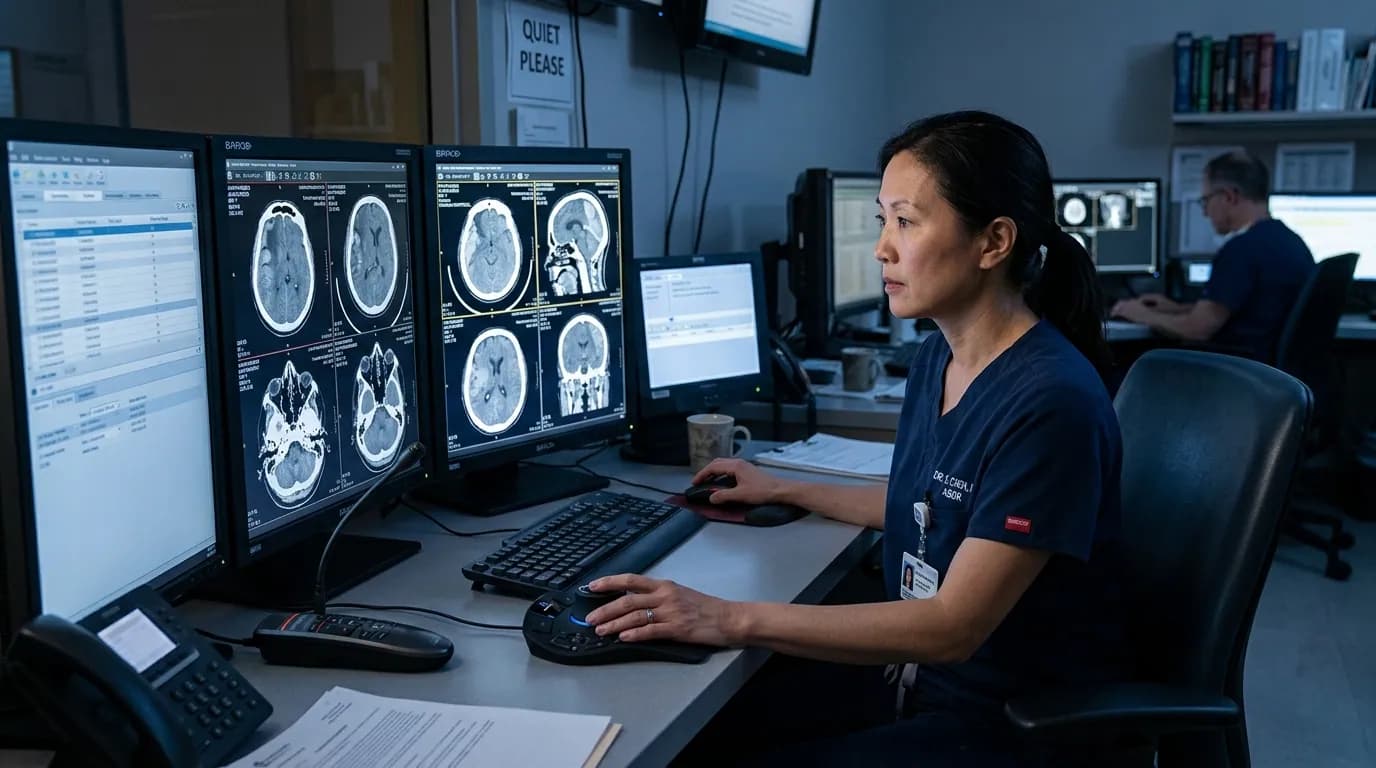
Emergency and STAT Radiology Reporting
Priority reporting support for time-sensitive imaging.
Routine studies are reported within 12 to 24 hours. STAT studies are moved to the front of the queue 24x7, with turnaround targets agreed for each facility and written into your service agreement. Critical findings are phoned directly to the referring physician with read-back documented.
- Priority Triage
- Immediate worklist elevation for high-acuity studies
- Direct Outreach
- Radiologist telephone call for critical findings
- Closed-Loop
- Verbal read-back documented directly into the EHR
Tell us about your radiology coverage needs.
Acute Priority Worklist
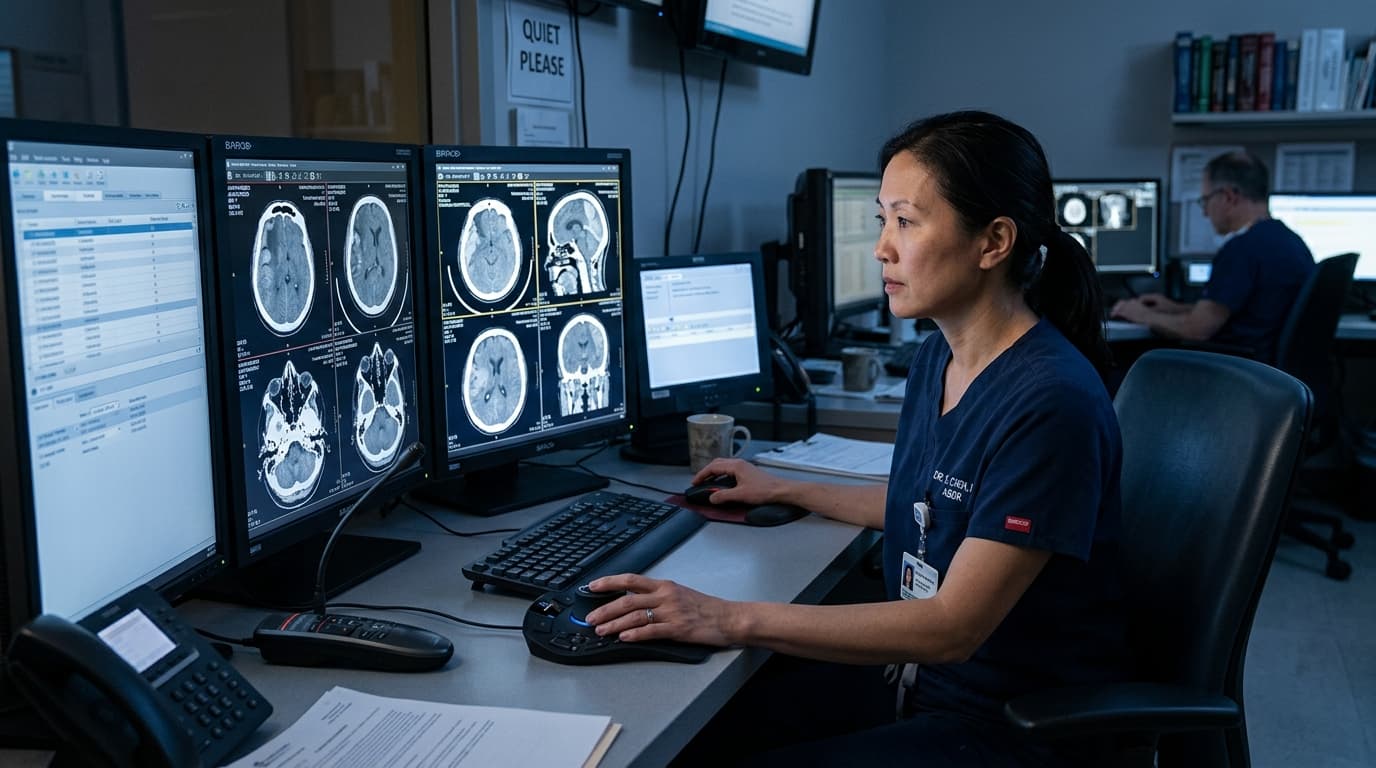
Emergency Teleradiology Console
U.S. Board-Certified Radiologists
- STATCT Chest / Abdomen (Trauma Protocol)Emergency Suite · In Review
- HighMRI Brain w/ & w/o IV ContrastInpatient Neuro · Pending
- RoutineX-Ray Chest 2-Views PA & LateralUrgent Care · Completed
- STATCT Head w/o Contrast (Acute Neuro)Trauma Bay / ED · Communication
- Step 1STAT Flagged
- Step 2Priority Routing
- Step 3Clinician Call
Direct verbal escalation to treating emergency physicianRead-back logged
Configurable triage protocols mapped to client hospital EHR/PACS · 24/7/365 Subspecialty Support
COMMON USE CASES
Common situations where priority reporting support may be needed.
Emergency imaging needs can vary by clinical situation, imaging volume, staffing, and time of day. Priority workflows can be configured around the facility's operational requirements.
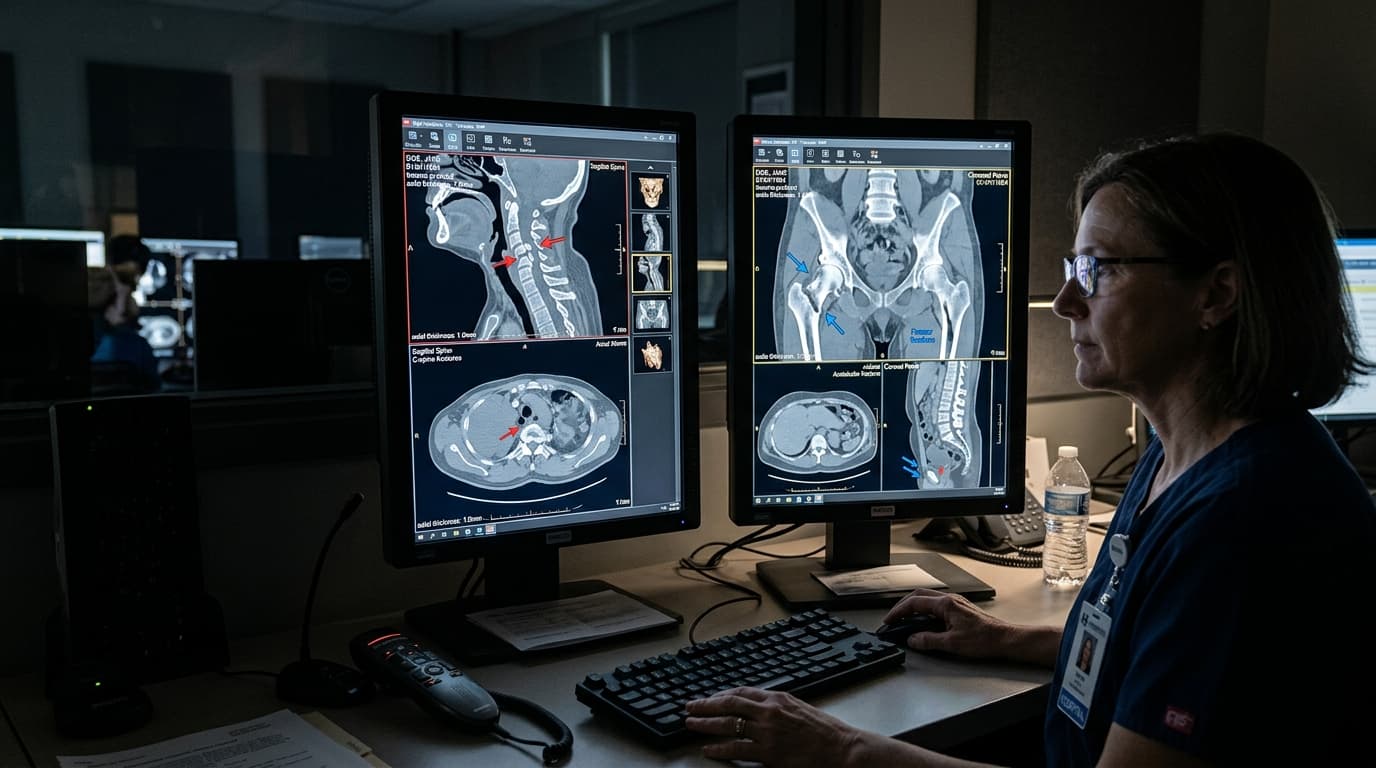
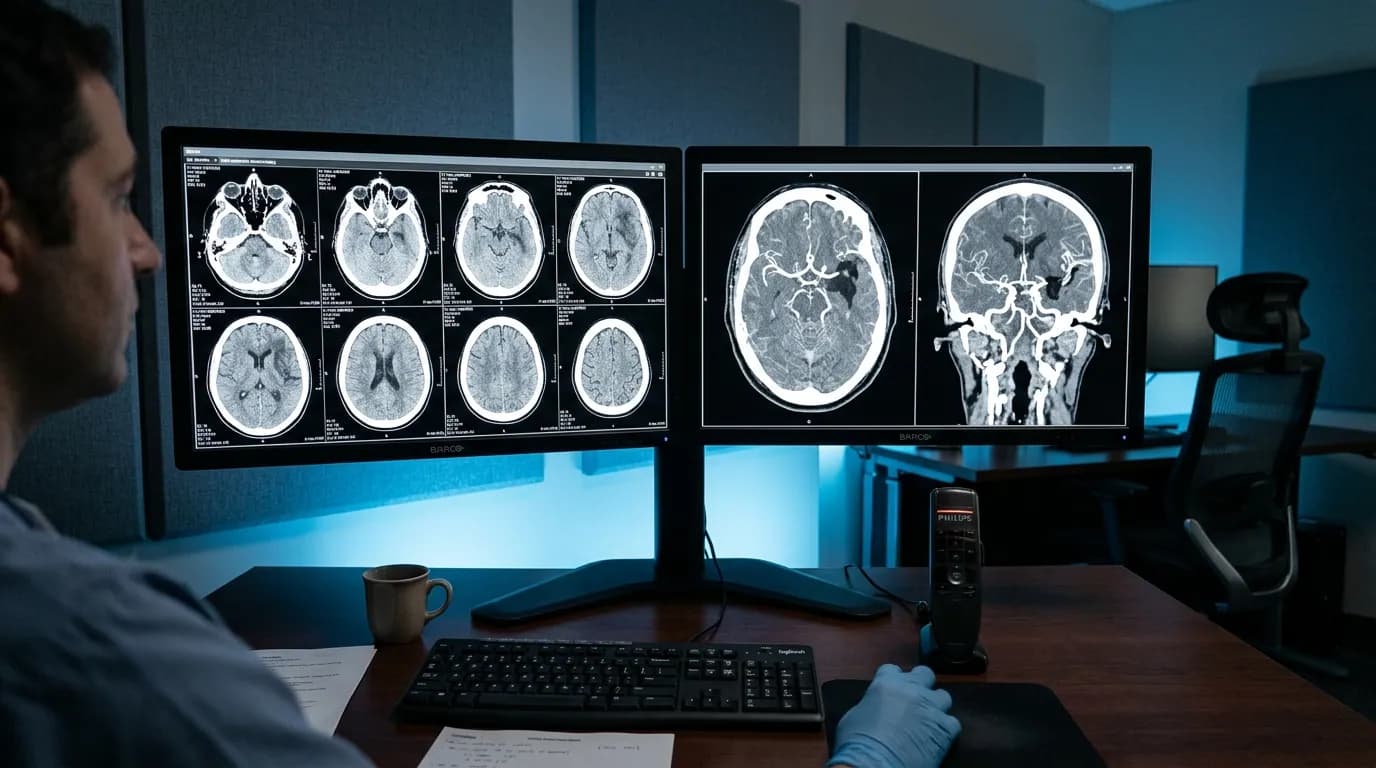
Different clinical situations One clearly defined priority workflow
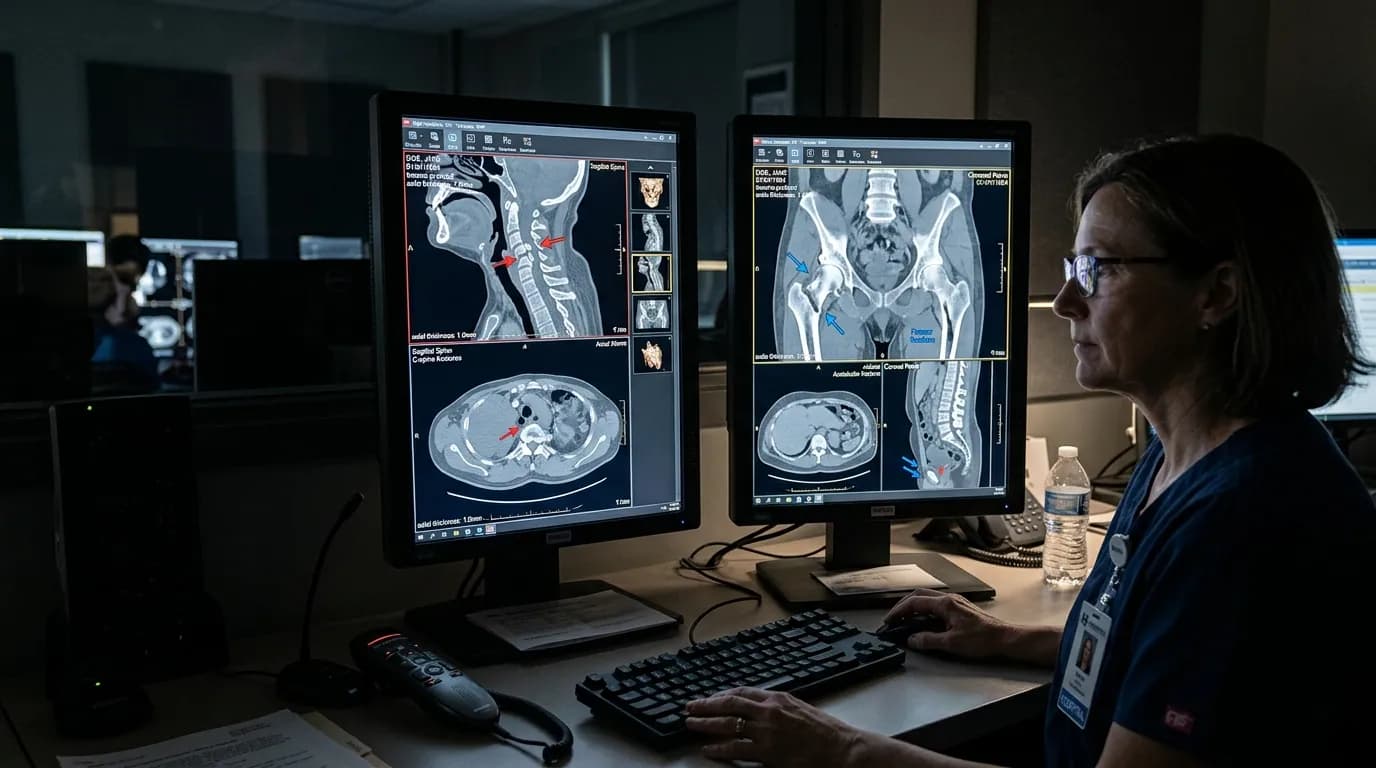
Rapid diagnostic interpretation for acute presentations requiring expedited admission, discharge, or procedural decisions in the emergency suite.
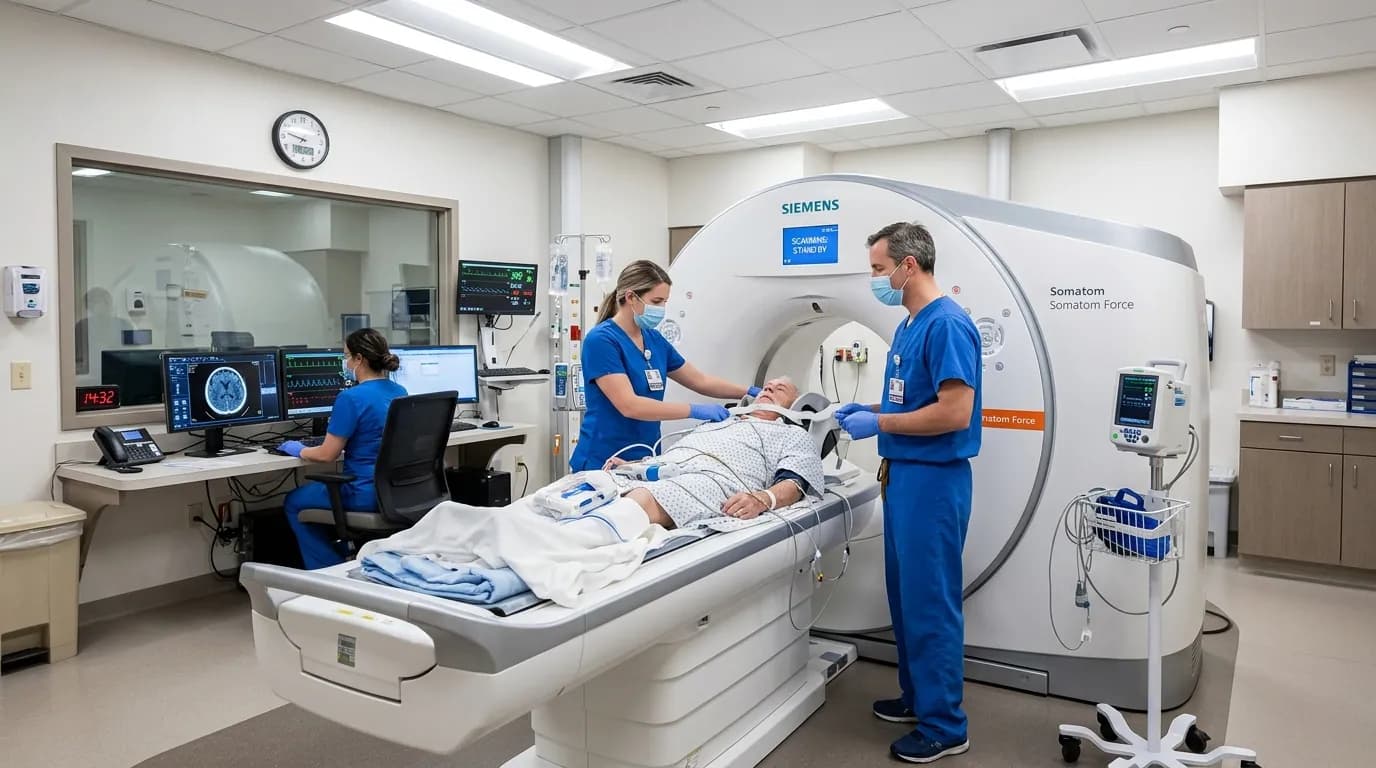
Clinical Focus: Acute triage, head trauma, chest pain, and abdominal pain
Contextual operational reference scenarios. WE Healthcare teleradiology priority routing protocols are tailored to each facility's clinical bylaws and medical staff workflow.
HOW IT WORKS
From STAT Flag to Direct Communication
The exact workflow should be configured around the facility's operational and clinical requirements.
- Clinical Indication
- Acute Neuro Protocol
- Active State in Workflow
- Flagged
Priority Classification Triggered
ROUTINE → STAT
The ordering clinician or technologist identifies an emergent clinical presentation. An acute protocol flag is appended upon study transmission, initiating priority handling.
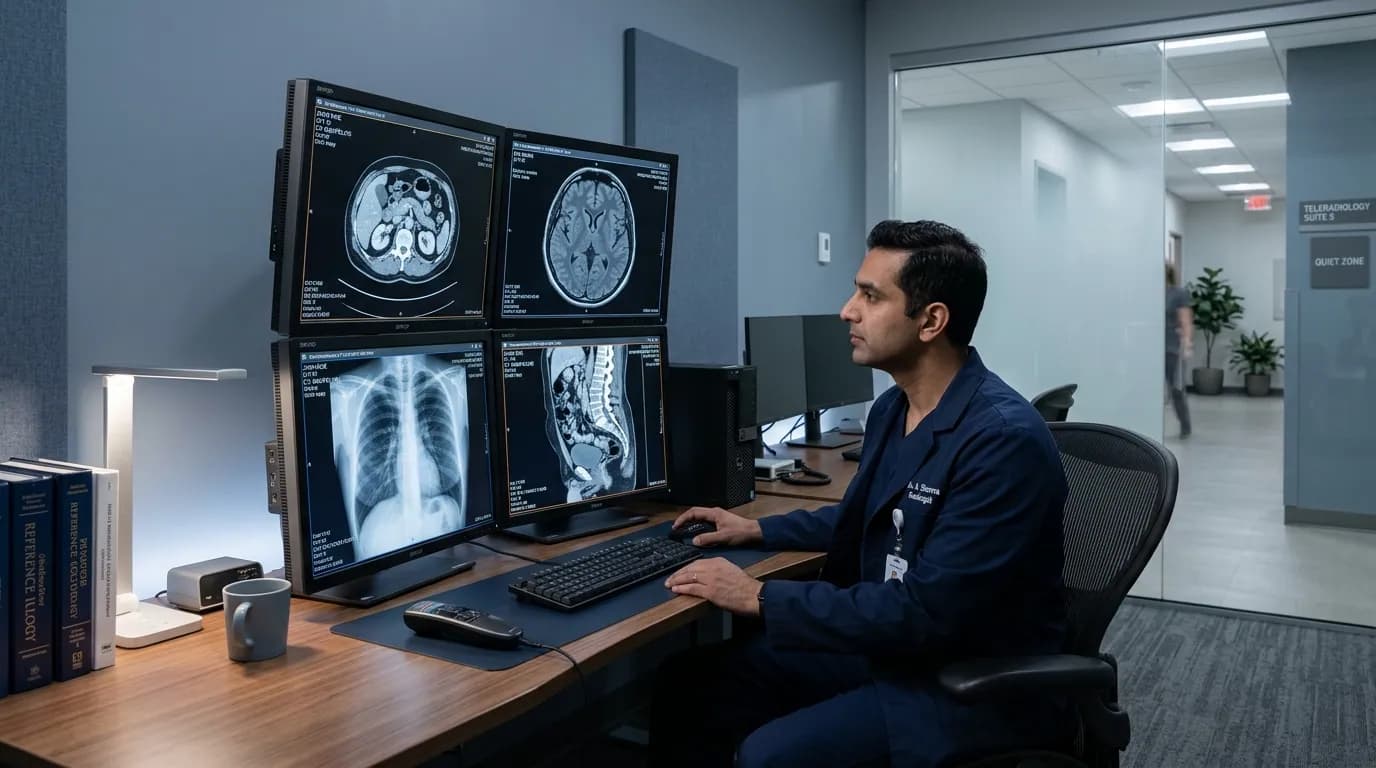
01Flag STAT
Identify a time-sensitive study and assign the appropriate priority.
Conceptual operational representation. Actual turnaround and escalation protocols are established in collaboration with facility leadership.
Communication → Defined Clinical Escalation Pathway · Next: Stroke Imaging ProtocolSTROKE IMAGING PROTOCOL
From Stroke Imaging to Clinical Communication
A defined workflow can help coordinate study routing, radiologist review, escalation, and communication around time-sensitive stroke imaging.
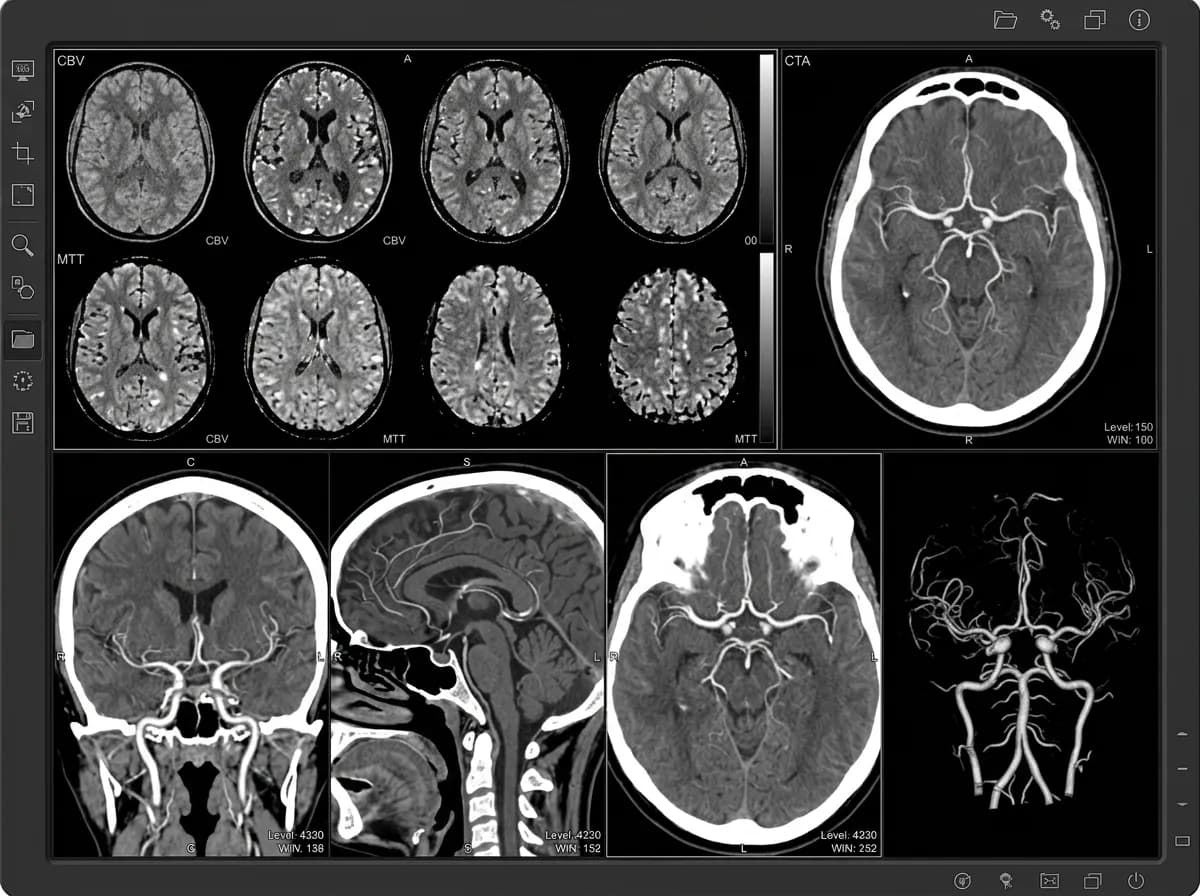
Ingestion & Protocol Recognition
Study identified upon transmission from facility PACS
- 01
flag
Ingestion & Protocol Recognition
Identify the stroke-related imaging study within the established workflow.
Inspecting Scan
- 02
auto-prioritize
Priority Worklist Alignment
Route the study according to the facility’s defined priority rules.
- 03
immediate review
Diagnostic Neuroradiology Match
Direct the study for appropriate radiologist review.
- 04
direct voice contact
Direct Clinical Outreach
Communicate time-sensitive findings through the facility-established communication pathway.
Conceptual stroke pathway. Priority rules and communication steps follow the facility's existing stroke protocol.
Next: Trauma Multi-Study WorkflowTRAUMA & CRITICAL CARE
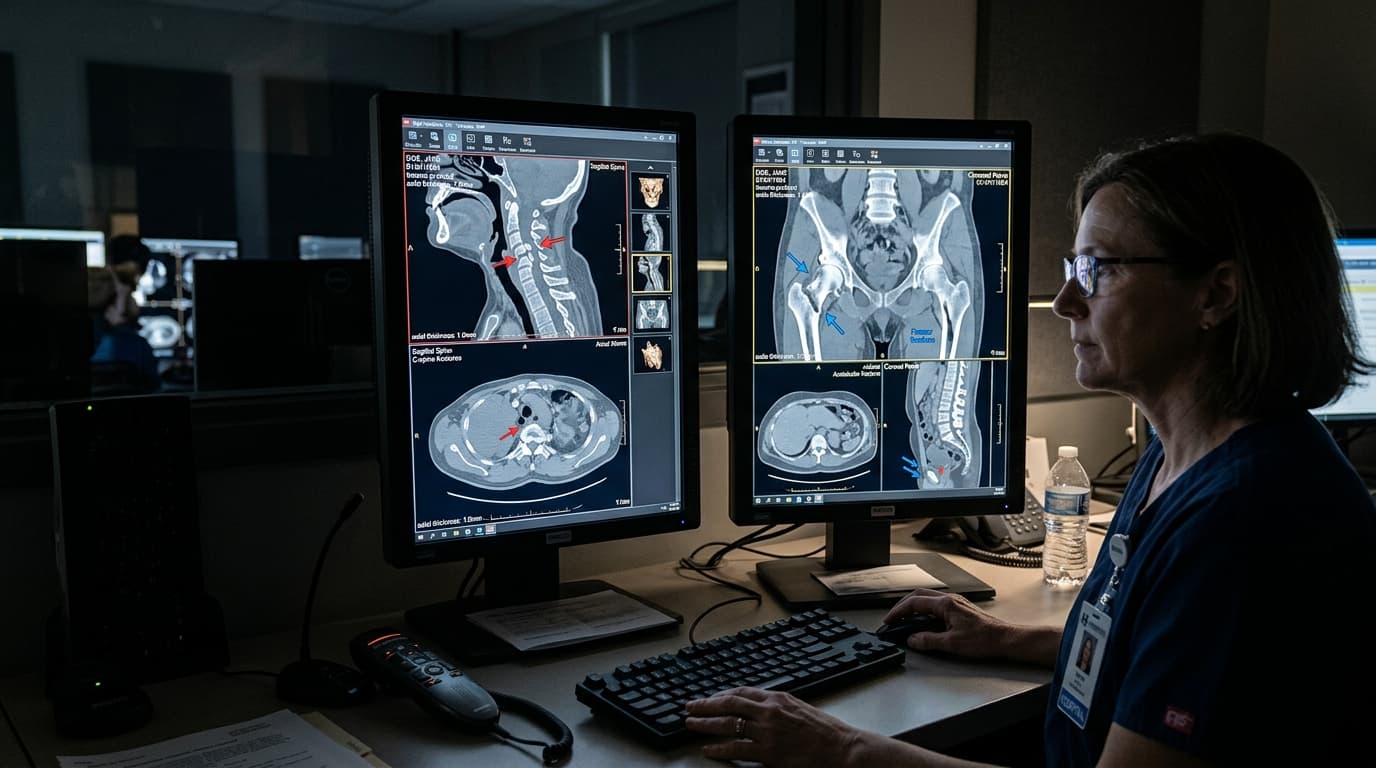
From Multiple Trauma Studies to Coordinated Clinical Communication
The workflow can be configured around facility requirements, helping organize priority studies, multi-study routing, radiologist review, and clinical communication.
Multi-Study Trauma Workup
Stage 01 / 04
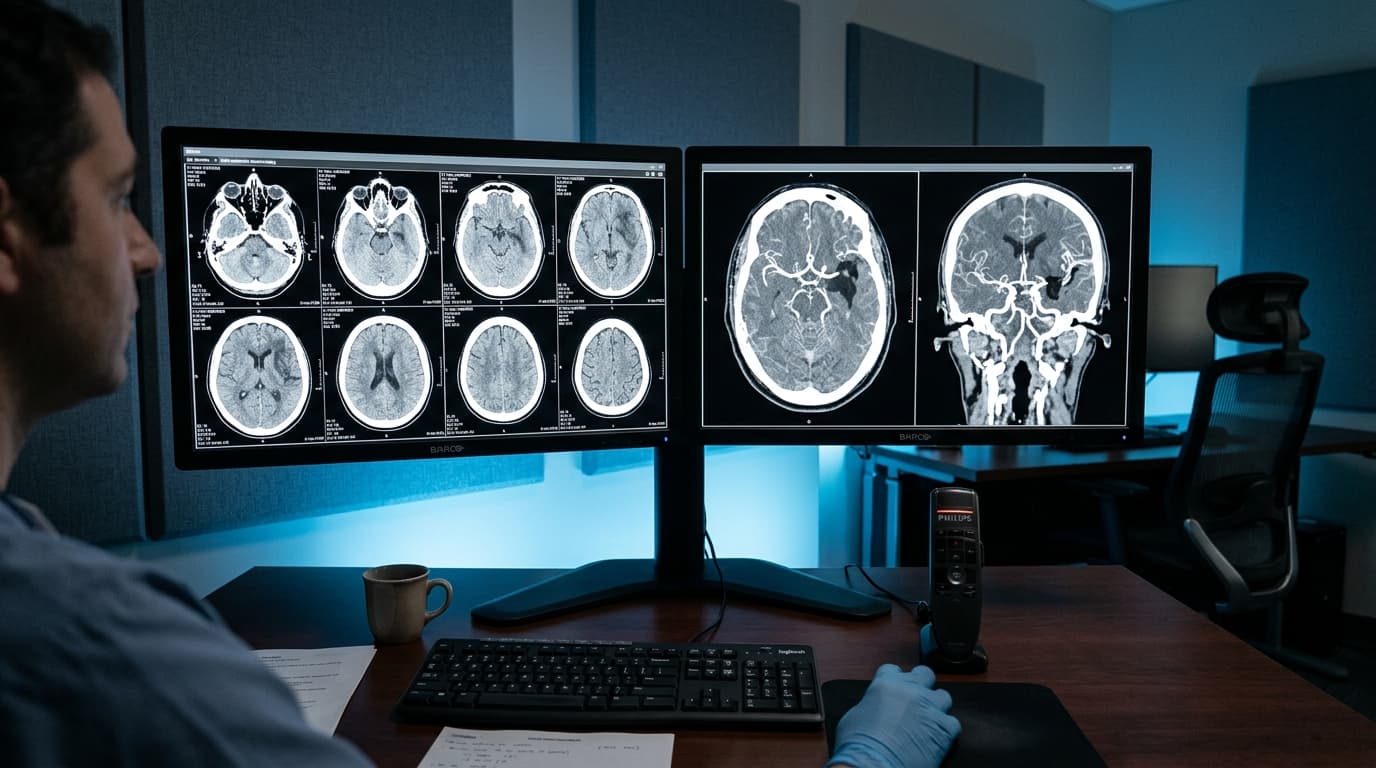
CT HEAD
Acute Neuro
FLAGGED
CT CHEST
Cardiothoracic
FLAGGED
CT ABDOMEN
Abdominopelvic
FLAGGED
X-RAY
Trauma Skeletal
FLAGGED
flag
Ingestion & Priority Recognition
Step 01 of 04
The exact workflow is configured around facility requirements. Illustrative, non-PHI.
- 01
flag
Ingestion & Priority Recognition
Identify priority trauma or critical-care imaging within the established workflow.
- 02
batch route
Polytrauma Study Grouping
Group and route related studies according to the facility's defined workflow.
- 03
priority read
Diagnostic Cross-Correlation
Direct the studies for appropriate radiologist review.
- 04
direct contact with trauma team
Direct Clinical Outreach
Communicate time-sensitive findings through the facility-established communication pathway.
Conceptual multi-study workflow. Grouping, routing, and escalation are configured around facility requirements.
Next: Service LevelsRadiology Support That Adapts to Your Workflow
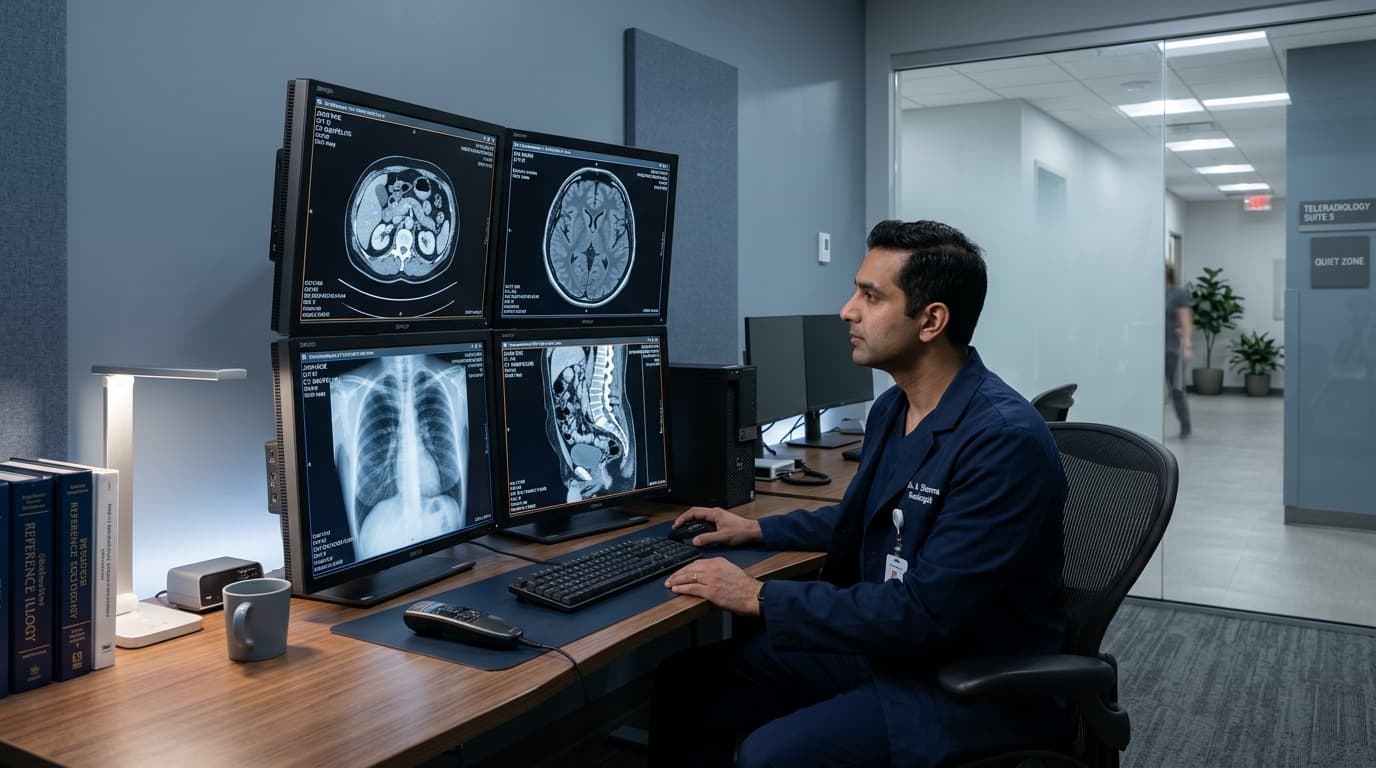
Every imaging operation has different needs. WE Healthcare provides flexible teleradiology support designed to work alongside your existing team, technology, and reporting workflow.
Priority reporting agreements are formal clinical partnerships. All triage protocols, credentialing parameters, and notification contact trees are mutually established and validated before study transmission begins.
Support designed around your operational and reporting needs.
Access to radiologists with expertise across a range of imaging specialties.
Designed to work with your existing PACS, RIS, and imaging workflow.
A structured approach to communication, reporting coordination, and ongoing collaboration.
Routine studies are reported within 12 to 24 hours. STAT studies are moved to the front of the queue 24x7, with turnaround targets agreed for each facility and written into your service agreement. Critical findings are phoned directly to the referring physician with read-back documented.
FREQUENTLY ASKED QUESTIONS
Questions About Emergency & STAT Reporting
Direct, transparent answers regarding priority routing protocols, emergency department integration, critical finding escalations, and operational coverage models.
Clinical Workflow Governance
Detailed turnaround targets, emergency escalation pathways, and medical staff credentialing guidelines are mutually formalized prior to launch.
STAT reporting is urgent interpretation of time-sensitive studies such as suspected stroke, trauma or acute chest pain. STAT studies are flagged when they are sent to us and read before routine work.
READY TO DISCUSS YOUR NEEDS?
Let's Discuss Your Emergency Radiology Coverage
Tell us about your radiology coverage needs, priority workflows, and operational requirements.
- Dedicated priority triage mapping for acute trauma & emergent protocols
- Direct radiologist-to-physician telephone consultation for critical findings