Managing Radiology Backlogs: A Practical Guide to Overflow Reporting
Volume spikes, staff absences, and new service lines can all leave studies waiting. A structured overflow model keeps the worklist moving without overloading your team.
1 min read
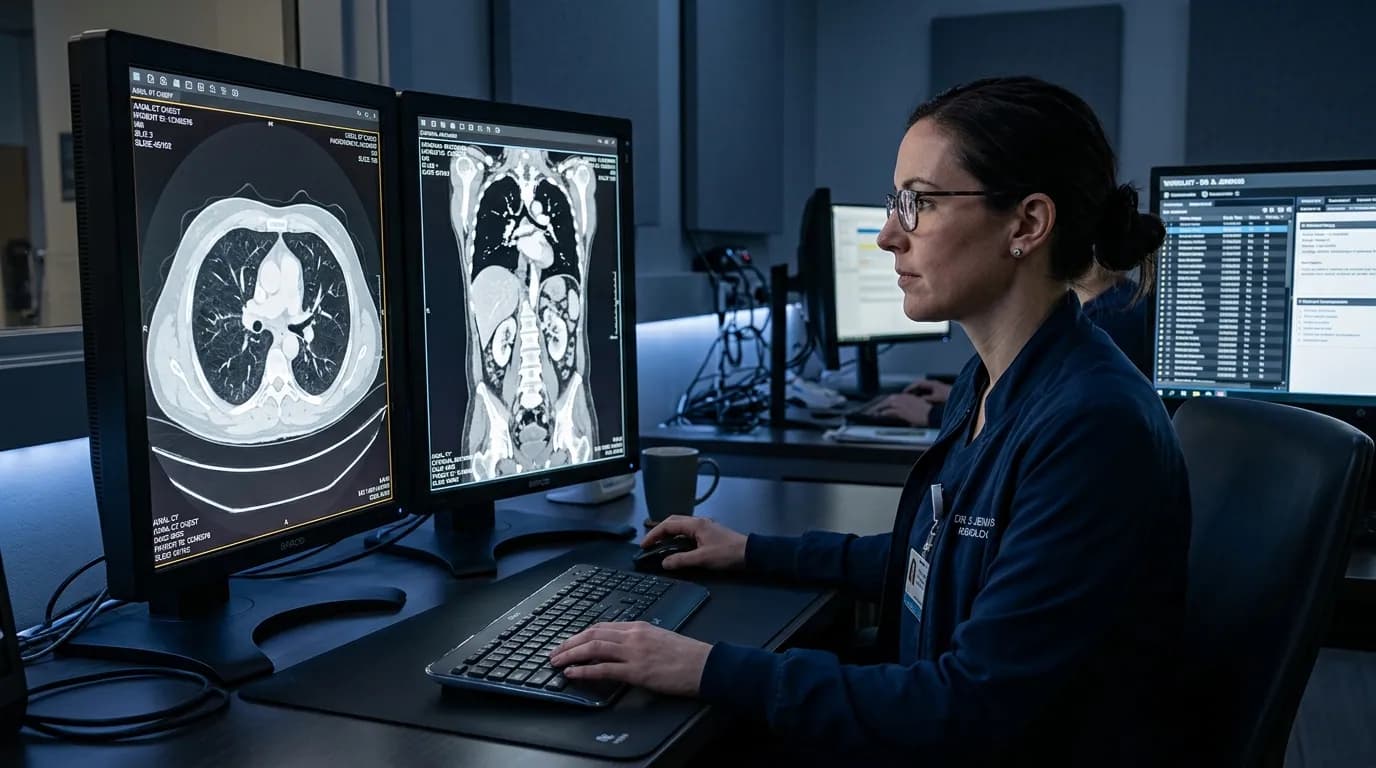
Backlogs rarely have a single cause. A radiologist on leave, a new outpatient contract, or a seasonal surge can each push the worklist beyond what the in-house team can clear in a normal day.
Spotting a backlog early
- Routine studies waiting longer than your usual turnaround target
- Referring clinicians chasing reports more often
- Radiologists regularly reading past the end of their shift
Building an overflow model
Overflow reporting routes a defined share of studies to an external team when volume passes a threshold. The rules can be based on study age, modality, or simply the number of unread studies on the list.
Prioritizing what gets read first
Not every study in a backlog carries the same urgency. Prioritize by clinical need first, then by age, so that time-sensitive studies are never stuck behind routine follow-ups.
Measuring whether it is working
Track the size and age of the worklist week by week. A good overflow arrangement should bring both back within target and keep them there, rather than just clearing a one-off spike.