Why Turnaround Time Matters in Stroke Imaging
In suspected stroke, imaging drives treatment decisions. A look at how reporting workflows can be structured around time-sensitive neuro studies.
WE Healthcare Editorial TeamTeleradiology & Operations
1 min read
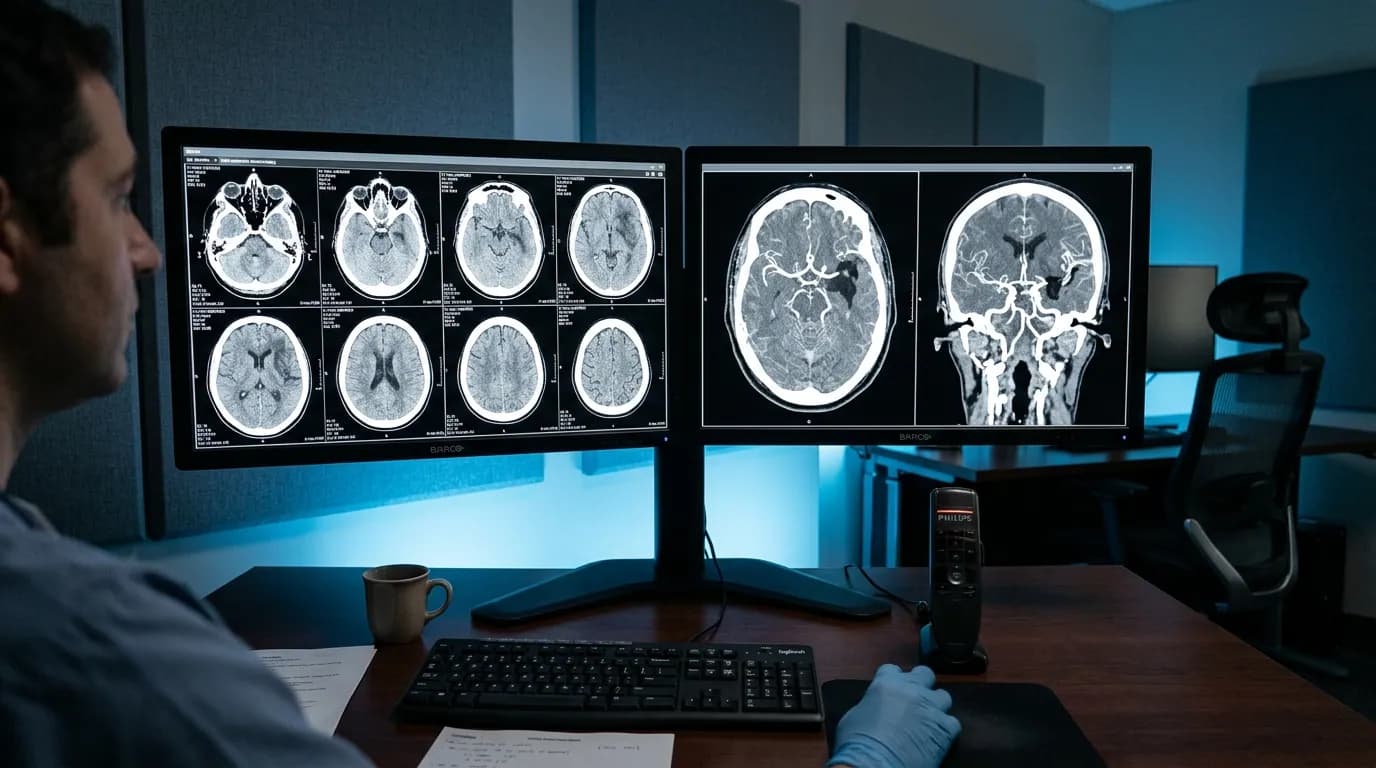
When a patient arrives with suspected stroke, the imaging team is part of a tightly timed pathway. The report is one of the inputs the treating team relies on, so how it is prioritized and communicated matters.
Where imaging sits in the stroke pathway
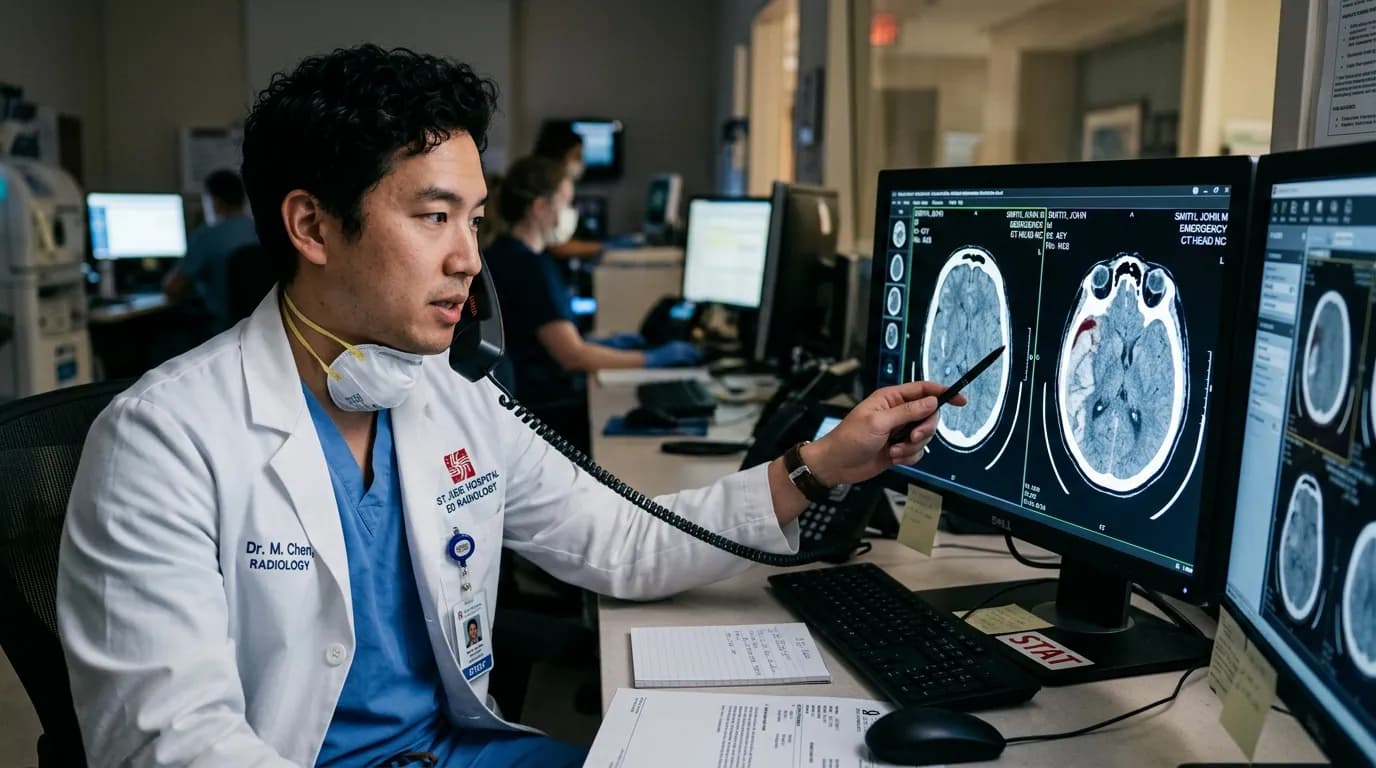
Protocols vary by facility, but commonly include non-contrast CT, CT angiography, and sometimes perfusion imaging. Each needs to be recognized as a stroke study the moment it reaches the worklist.
Designing the workflow around speed
- Flag stroke protocol studies so they move to the top of the worklist
- Agree how preliminary findings are communicated to the stroke team
- Make sure prior imaging is available to the reading radiologist
- Document the escalation path for time-critical findings
Reviewing performance
Regularly reviewing how stroke studies moved through the workflow, from arrival to final report, helps both the facility and the reporting team find and fix delays.